


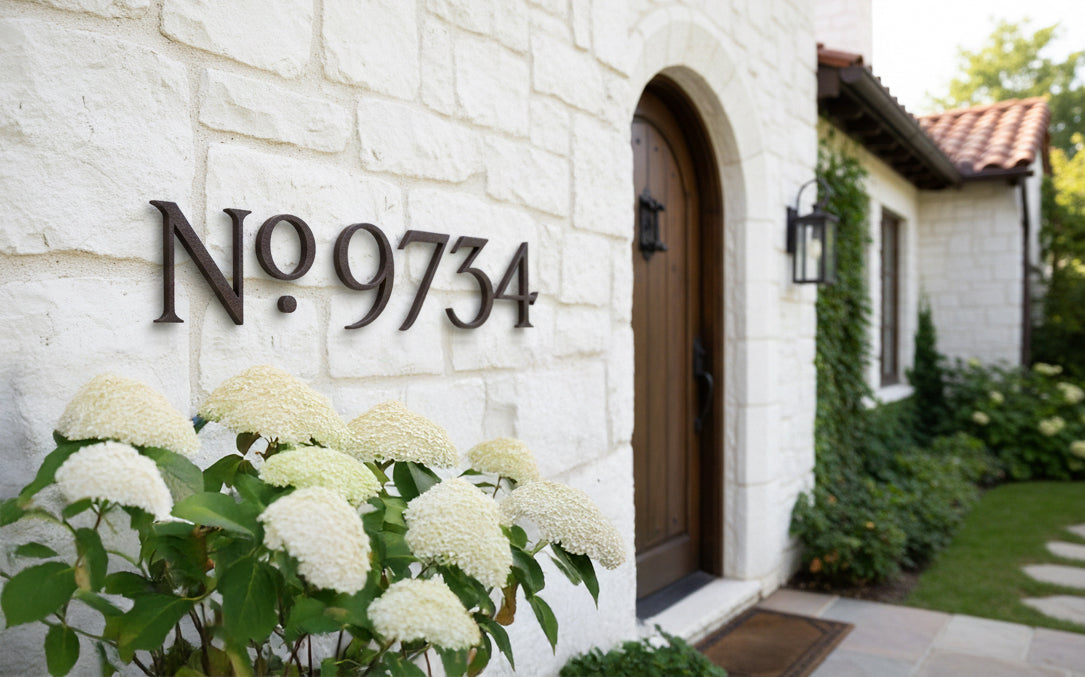
What Size House Numbers Do You Need? It Depends on Your Driveway
Picture a pizza driver on your street at 8:45 on a Friday. Headlights on, phone in one hand, crawling along at ten miles an hour and squinting at every porch.
Can they find your house on the first pass? Or do they roll right by, hit the brakes three doors down, and circle back while your pizza gets cold?
That comes down to one decision most people make in about four seconds: what size house numbers to buy. And most people get it wrong the same way. They go too small.
Here's how to get it right, based on the one measurement that actually matters: how far your numbers sit from the street.
The quick answer
Measure from the curb to the spot where your numbers will hang (not to the front door, if they're going somewhere else). Then:
- Under 50 feet: 4 to 6 inches
- 50 to 100 feet: 8 to 10 inches
- More than 100 feet: 12 inches and up
If you want a rule you can do in your head, sign makers use roughly one inch of letter height for every ten feet of viewing distance. Numbers 60 feet from the street? Six inches will do the job, and eight will look like you meant it.
That's the short version. The rest of this post covers the stuff that can bump you up a size.
Why smaller almost always looks wrong
Numbers look bigger in your hands than they do on your house.
When you're holding a 4-inch numeral at the kitchen counter, it feels substantial. Screw it onto a two-story facade next to a garage door, and it shrinks to the size of a postage stamp. Your house is a big object, and the numbers have to hold their own against it.
We've shipped a lot of house numbers. We've heard plenty of "I wish I'd gone bigger." We've never once heard "I wish I'd gone smaller."
Four things that should bump you up a size
The distance chart gets you in the neighborhood. These details tell you whether to round up.
1. Your house is big, or tall
A two-story colonial with a wide facade swallows small numbers. Same goes for anything mounted high, like above a garage or on a second-floor gable. If the wall is big, the numbers should be too.
2. The font is thin
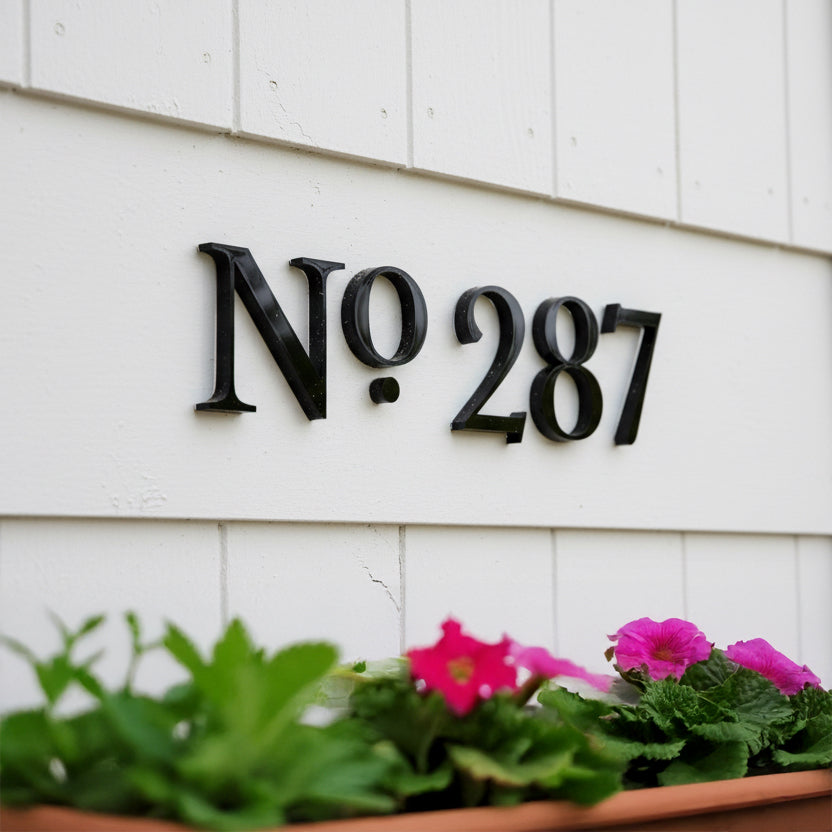
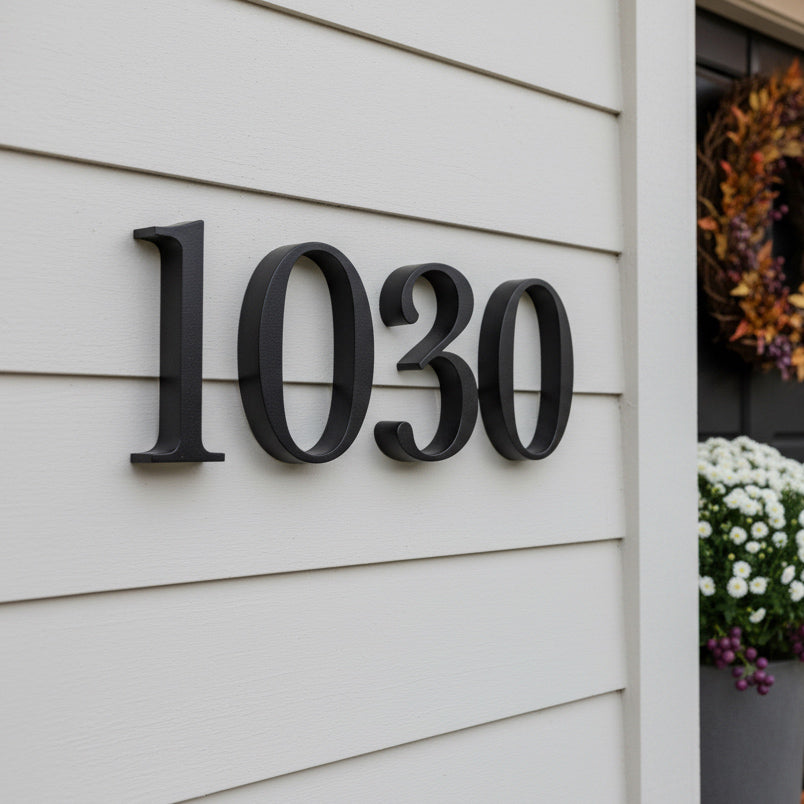
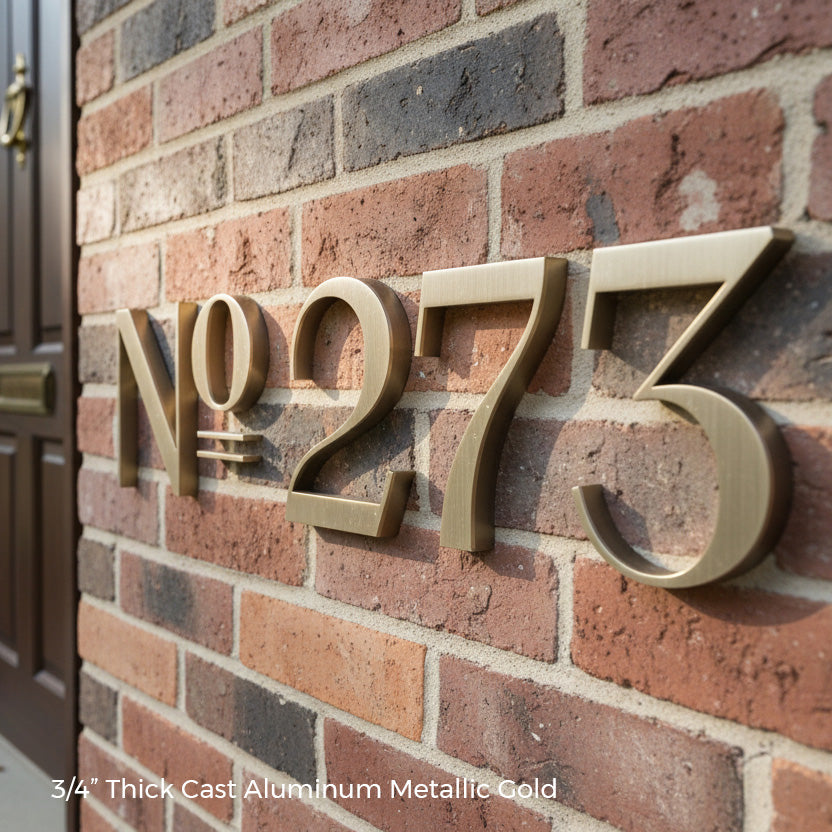
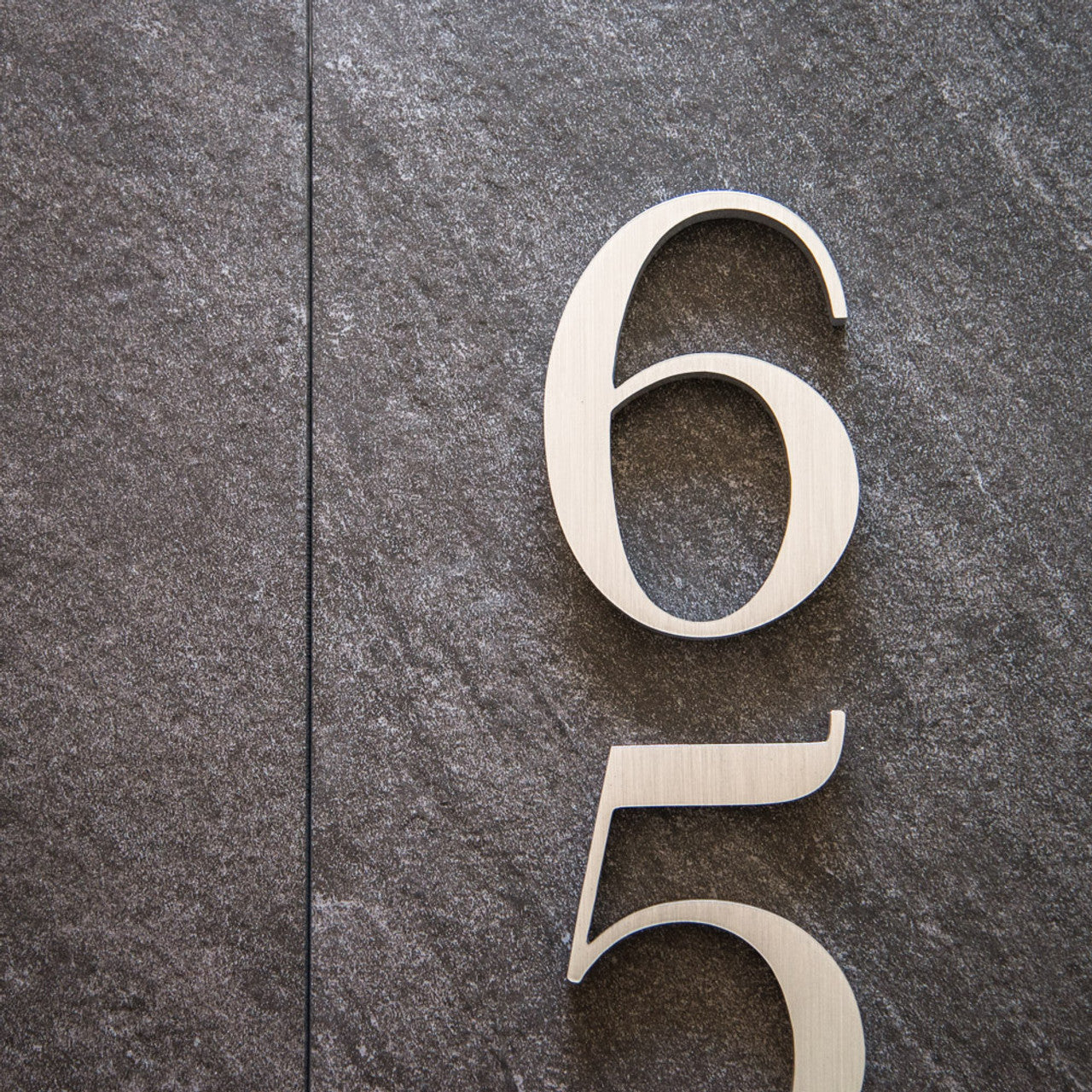
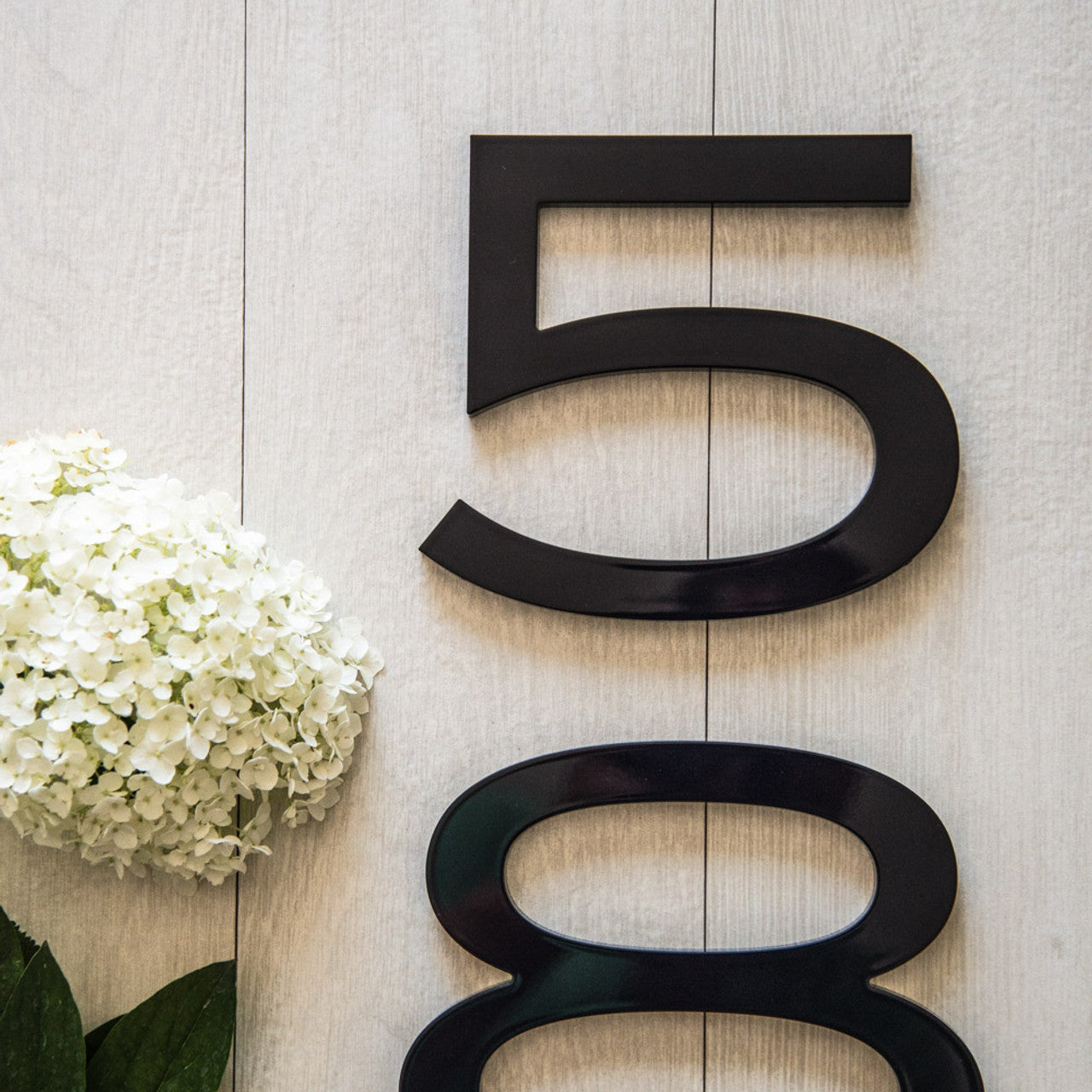
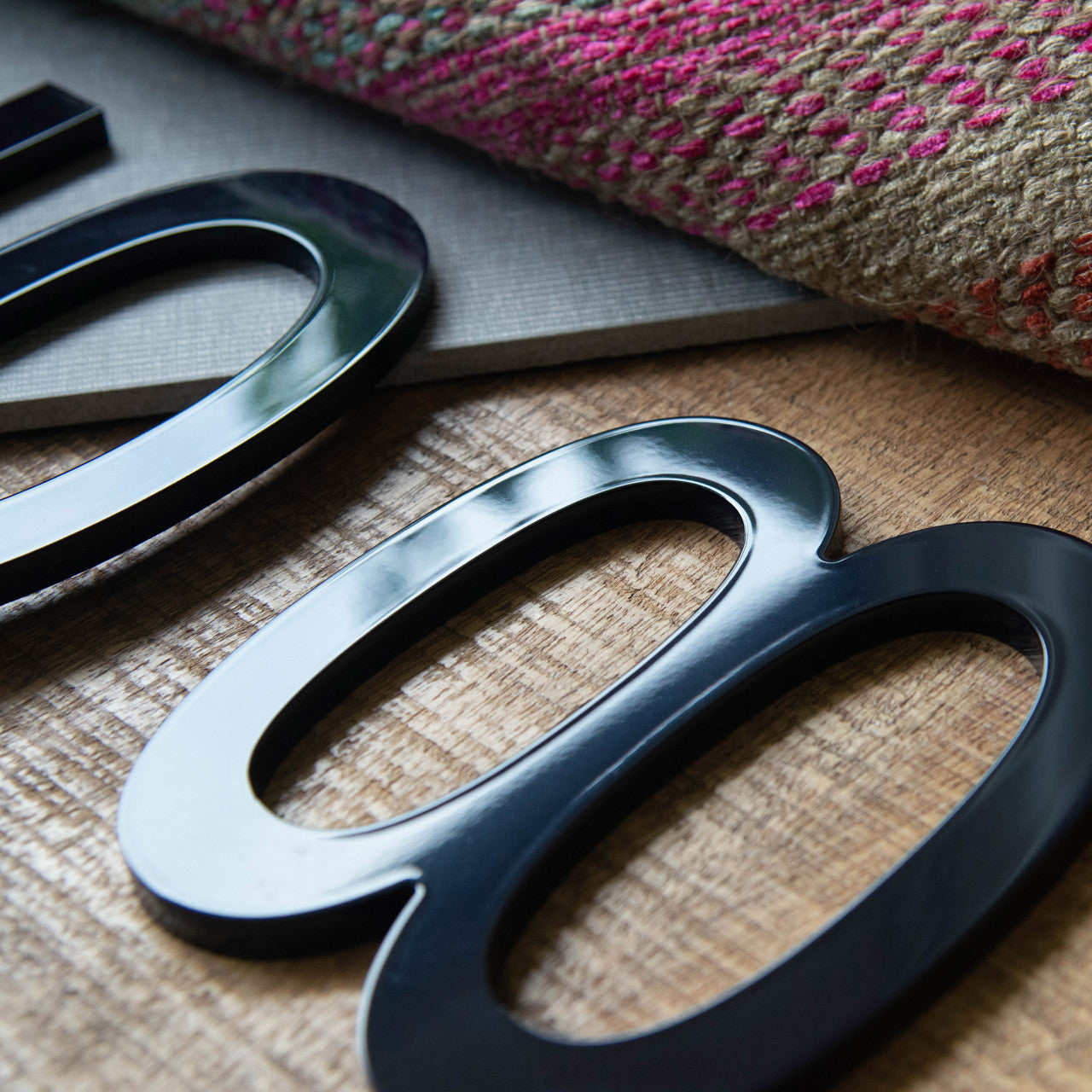
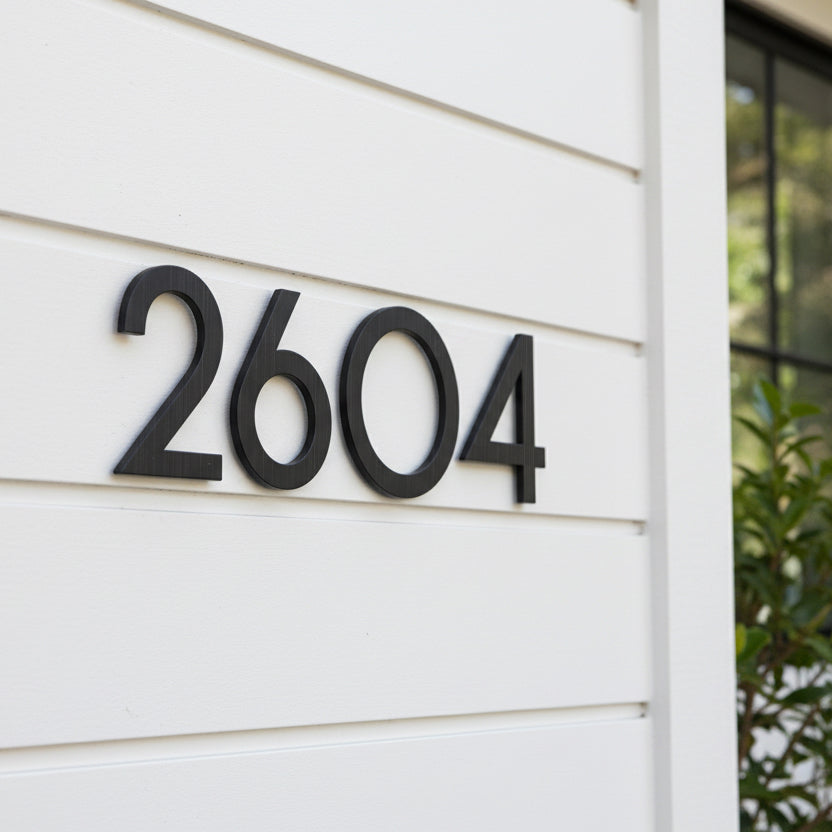
Stroke weight matters as much as height. A delicate, open font like ValutaOpen reads beautifully up close but loses detail at a distance. A heavier font like Depot or Trafalgar holds together from the street. If you love a lighter typeface (and there are good reasons to), go one size up to make up for it.
3. There isn't much contrast
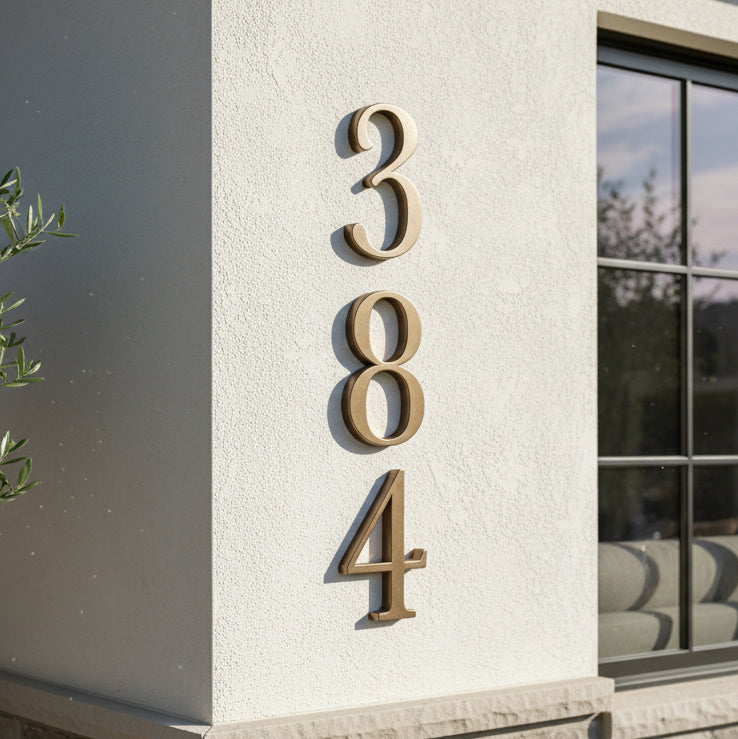
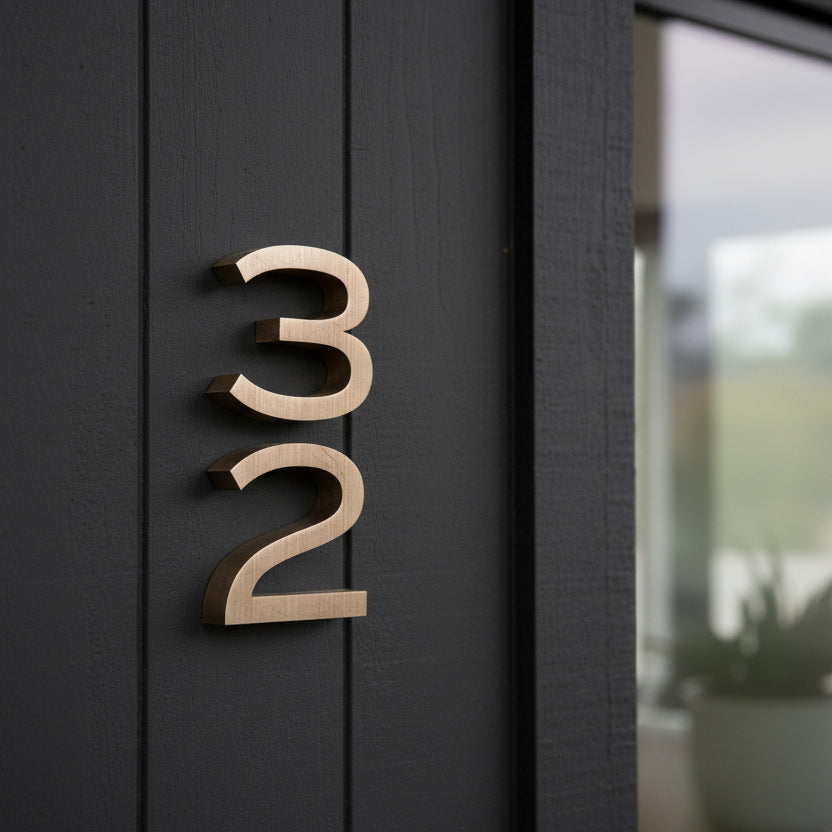
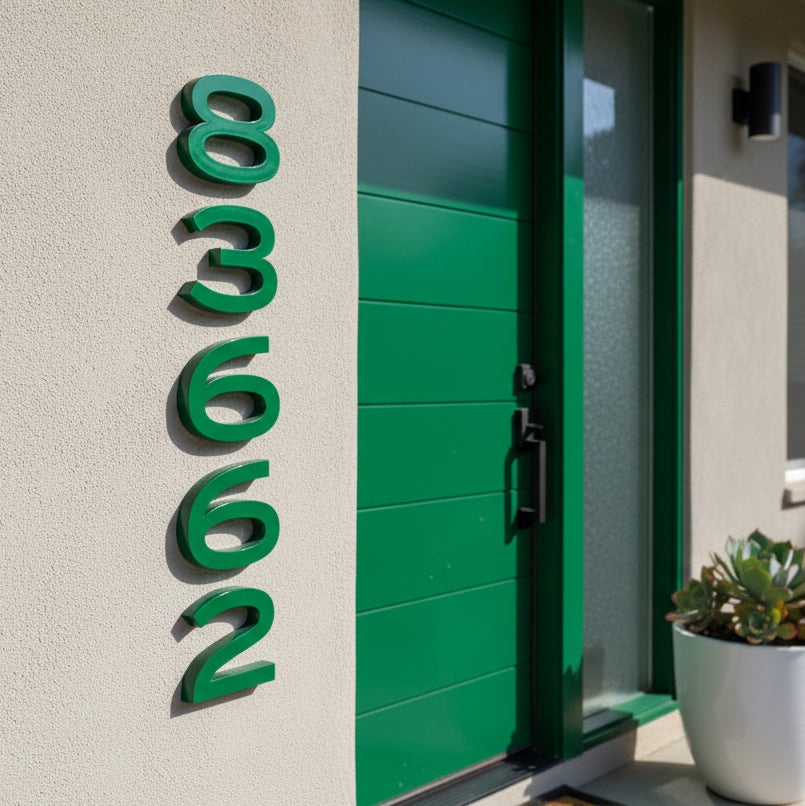
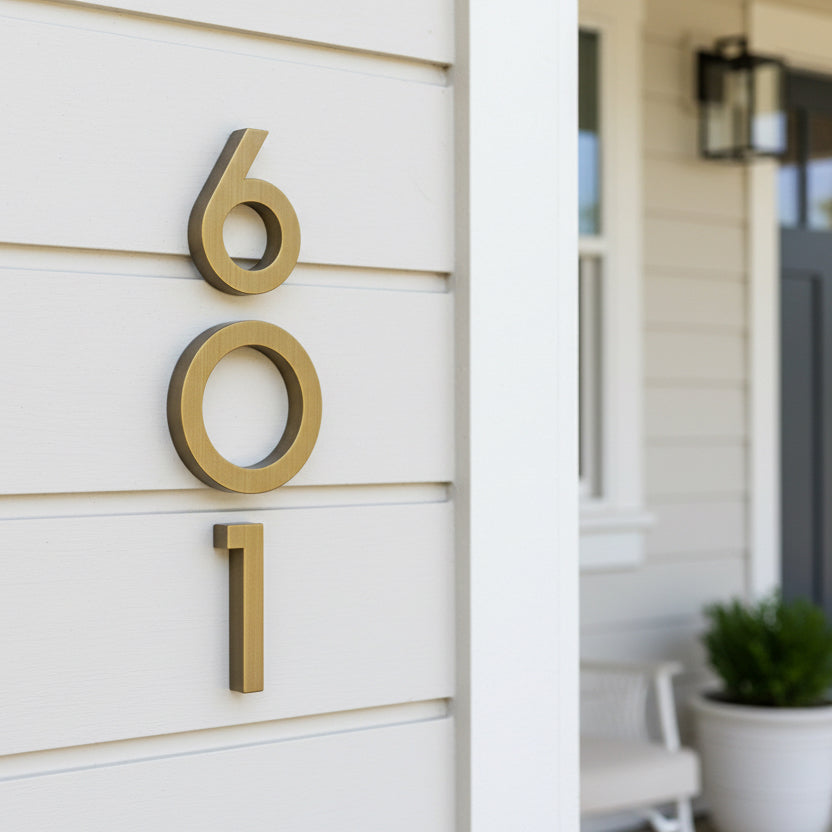
Brass on cream siding? Black on charcoal brick? When the numbers and the wall are close in color, the eye needs more size to pick them out. Get the contrast right first. If you can't, go bigger.
4. Stuff is in the way
Trees, a porch column, a hedge that's going to be twice as tall in three years. Stand at the curb and look at the exact spot you're planning. If anything interrupts the view even partly, size up or move the numbers.
Don't forget the fire department
This is where the fun design choices meet the boring rules, and the boring rules matter.
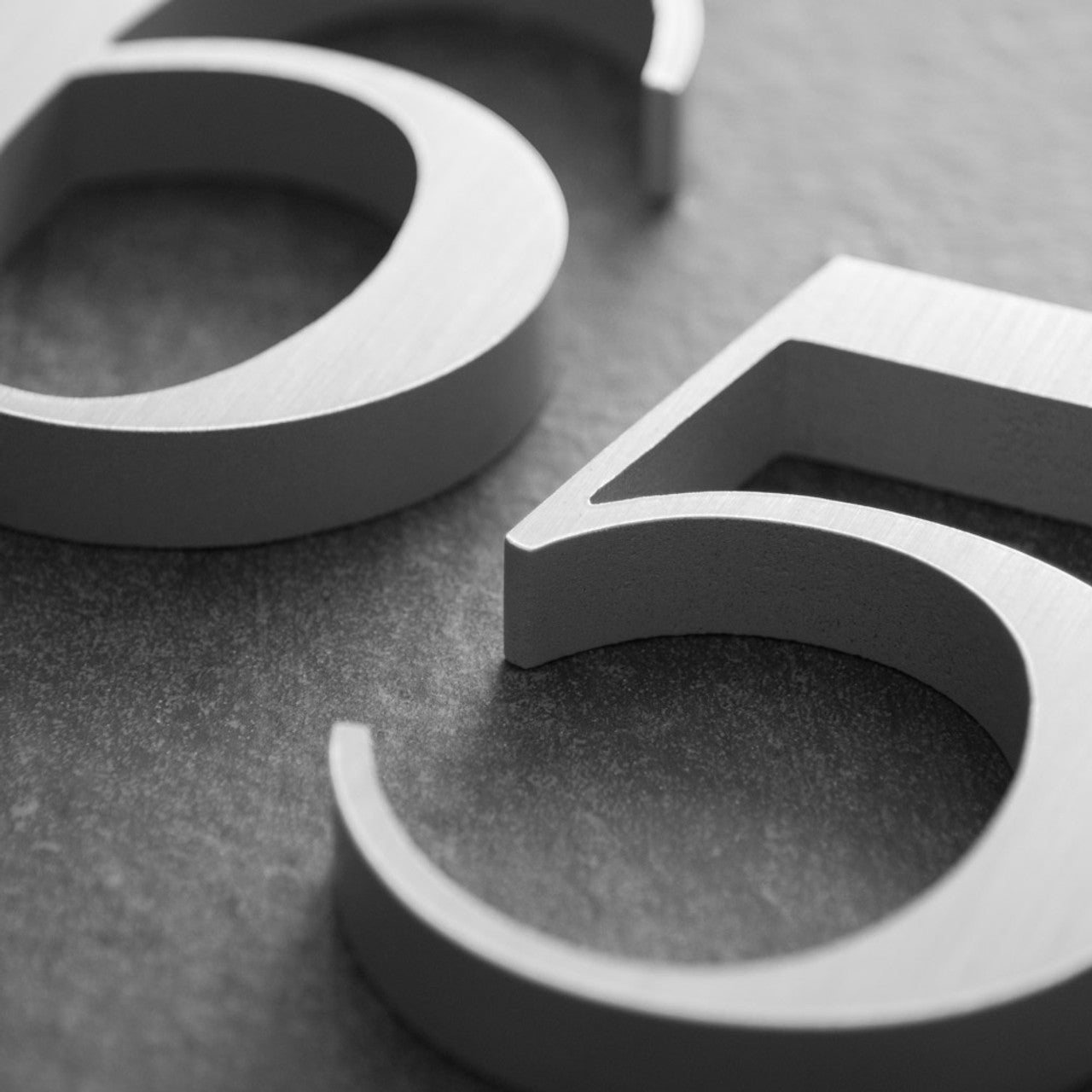
Most U.S. residential codes (based on the International Residential Code) require house numbers to be at least 4 inches tall with a half-inch stroke width, visible from the street, and in a color that contrasts with the wall. Your city or HOA might ask for more, so a quick call is worth it.
Four inches is the legal floor, though. It's not a design target. When an ambulance is looking for your house at night, bigger numbers save real time. We wrote more about that in why large house numbers improve emergency response times.
The tape test (do this before you order)
This takes ten minutes and settles every argument.
- Print your address at the size you're considering. Most home printers can tile a big number across a few sheets.
- Tape it to the wall where the numbers will go.
- Walk to the curb. Then walk across the street.
- Ask yourself: can I read this without trying?
If you catch yourself squinting even a little, go up a size. If it looks almost too big from the porch, it's probably right from the street.
Can't picture it on paper? Our design preview tool lets you try your address in different fonts and sizes before you commit.
What about homes way back from the road?
If your house sits 150 feet down a long driveway, even 12-inch numbers on the facade can get lost. That's when you think about a second set closer to the street, on a post, a stone pillar, a mailbox, or a planter at the end of the drive. You're no longer choosing one size. You're choosing where the numbers do their job.
We put together a whole guide for this: best oversized house numbers for homes set back from the street.
Our honest recommendation
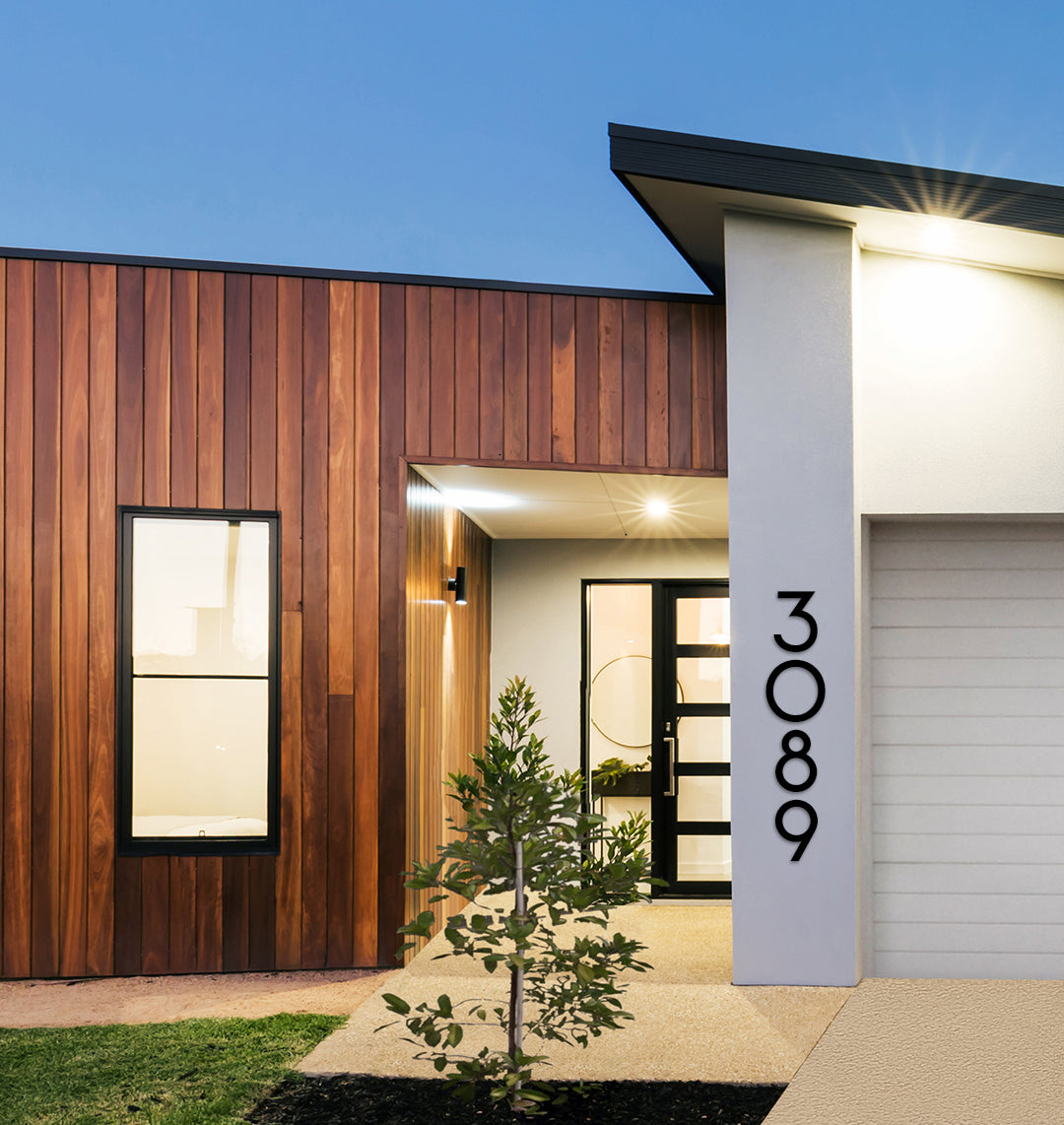
For most suburban homes sitting 30 to 60 feet back, 6 inches is the sweet spot. It clears code easily, reads cleanly from a car, and looks proportional on a typical one- or two-story front.
If you're between two sizes, pick the bigger one. Every time.
And if your size isn't in the dropdown, just ask. We make every set to order, so custom sizes are no problem. Browse the full collection of custom house numbers and letters, measure your curb, and do the tape test. Your pizza driver will thank you.

Share:
Spooky Yet Stylish House Numbers for Halloween Vibes
Winterizing Your Exterior: Essential Prep for Cold Weather